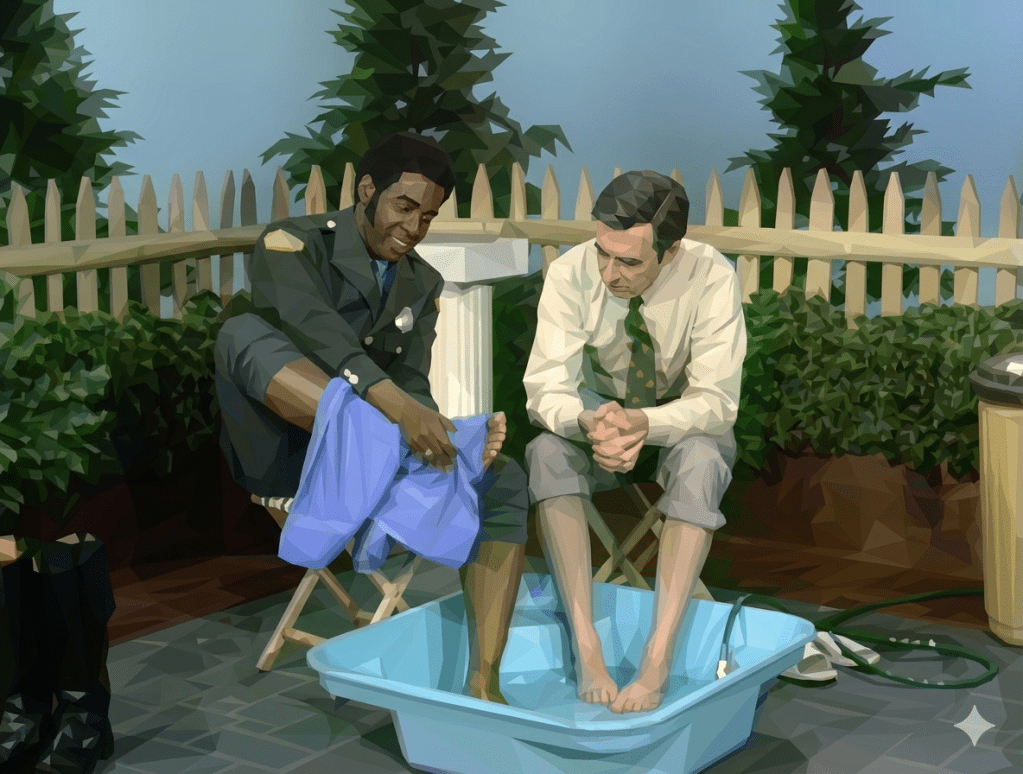

In 1969, a subtle, quiet, but radical act of reconciliation was witnessed on television screens around the United States. It took place on a popular children’s program, Mr. Rogers’ Neighborhood. Fred Rogers, the show’s creator and host, invited the character known as Officer Clemmons (played by the talented vocalist François Scarborough Clemmons) to cool off on a hot summer day by soaking his feet in a plastic wading pool. As both men sat, removed their shoes and socks, placed their feet together in the water, they relaxed, discussed the weather, and dried their feet with a shared towel. This innocent and unassuming gesture was profound for both its obvious and lesser-known reasons of the time.
Officer Clemmons is a Black man. In 1969, many aspects of American life remained racially segregated, including community pools. Mr. Rogers, a white middle-class fatherly figure, represented what the Civil Rights movement had been marching for: a beloved community where everyone would be treated as equal. This story may seem trivial today, but there was another dynamic at play and unbeknownst to the audience—François Clemmons was also a gay man. Fred Rogers, aware of his position as a role model to millions of children around the country, saw François for who he was: a human being who happened to be Black and gay. Contrary to the time, neither of these facts precluded François from becoming a long-standing character on the show where he inspired millions of American children with his musical talent and on-camera presence.
Rogers didn’t just share a swimming pool that day on television with his friend of a different race; he also shared it knowing he was gay. He used the power of television to communicate a powerful message: all people are worthy of dignity, love, and full inclusion. Fred Rogers was well known as a famous children’s television host, but he was also an ordained Presbyterian minister. He may not have spoken for Christians everywhere, but he unmistakably offered a model he learned from another teacher, Jesus of Nazareth, that we can aspire to implement in our own lives and society. It is better to love our neighbor to the same degree we love ourselves, even when many choose to do otherwise.
The world benefits from leaders of hope like François Clemmons and Fred Rogers. They do so with conviction in the values that cultivate the dignity, beauty, and belonging of others. Leaders of hope inspire us to believe the best about one another, creating deeper bonds of trust that break down barriers, and demonstrating how goodness is a gift to humanity meant to be shared with all. We don’t need big platforms or a unique status to lead with hope, only a conviction that it’s better to “live a life of love” as the guiding principle for a better tomorrow.



 Matt Till