

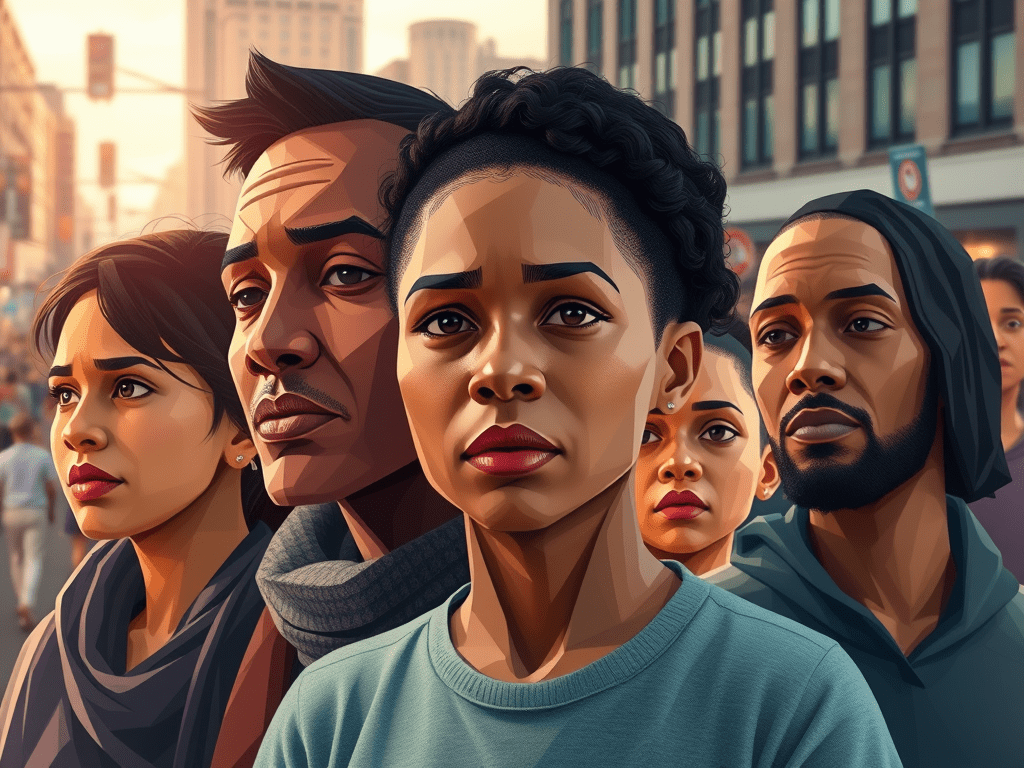
The plainclothes man, somberly stepping to the waiting microphones, briefly greeted the press, along with the growing number of first responders and community members in attendance. A quintessential city street, now transformed into an impromptu waiting area, stretched out before them. Tree-lined with homes, small businesses, a church, and a school, this bustling Midwest neighborhood had become the nation’s focal point of chaos and pain. In a moment of shared emotion, the man spoke what many were feeling: “There are no words for this—there shouldn’t be words for these types of incidents because they shouldn’t happen.”[1]
The Politics of Justice
This week, America is once again grieving the loss of innocent lives and a nation broken by a grave injustice. A shooting at a Catholic K-8 School in Minneapolis while students and adults sat in church pews during their morning prayers left 2 children dead and 17 injured.[2] It’s become a familiar scene that still leaves us asking, “When will there be justice?”
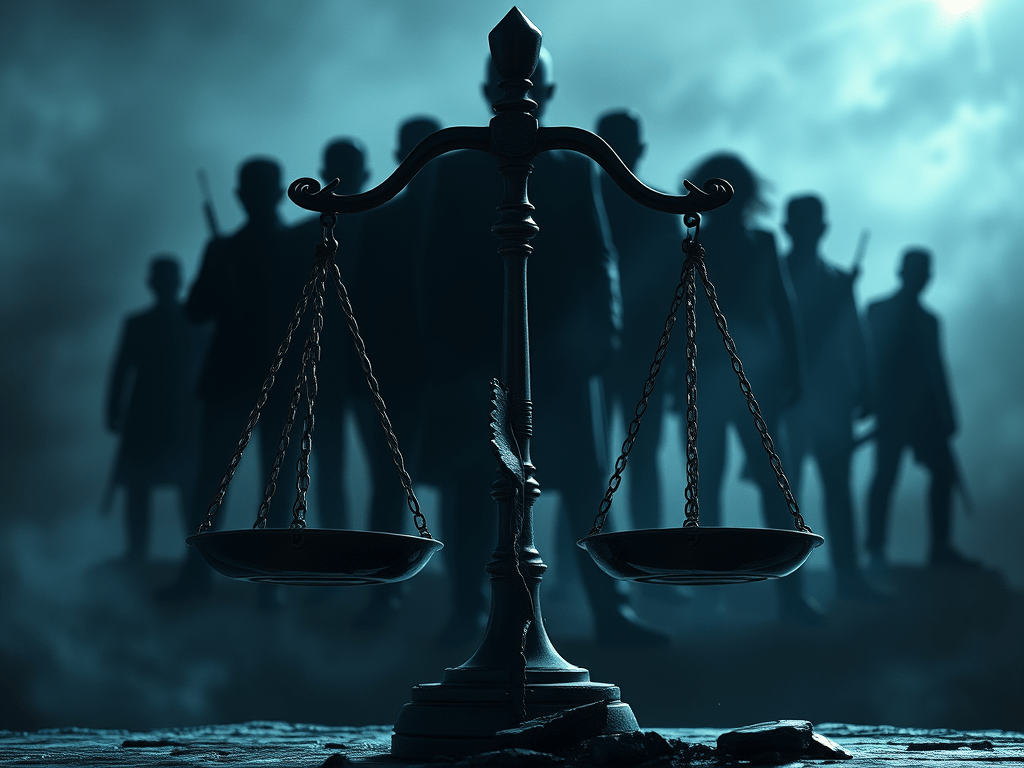
Justice is political because violence and malice is an act against others. Violence impacts the affairs of a broader community and always reveals a disturbing condition of our shared humanity. Justice is political because even the very forms of violence that are acknowledged, prevented, accepted, or endorsed are matters decided among members of society.
Despite our social grief and frustration, we’ve failed to keep our children safe when it comes to gun violence—at home, at the playground, in our schools, and places of worship. There’s public consensus that using a gun to commit an act of violence against another person—especially children—is profoundly unacceptable. However, in a twist of logic, society has simultaneously endorsed the belief that acts of gun violence are an unavoidable and non-preventable outcome bound by a constitutional right to carry a gun.
The words written here, along with our public debates, will not alleviate the pain victims feel today or in the future. Neither will a constitutional right to carry make peace with the violence created by someone else’s right to carry a firearm.
For those of us old enough to remember the images of the unfolding horror on April 20, 1999, at Columbine High School in Colorado, we recall a moment that shocked a nation. Weapons of war in the hands of teenagers seemed too outlandish and incomprehensible, but it happened in plain sight for all to see. Still grief-stricken, a debate began, and the adults with the responsibility of protecting children ultimately chose solutions that endorse the access and production of more guns and ammunition, compromising instead to fortify “soft targets,” making them more restrictive, less inviting, and accessible to the community.
The results of standing with gun rights activists and lobbyists have contributed to a three-decade decline in our social capital (defined as the equity of trust and responsibility among community members). It has also predictably led to a dramatic increase in devastating mass shootings, firearm accidents, and a society that is now fundamentally less safe and secure among its own citizens. Today, gun violence is the leading cause of death for children and teens.[3] Gun violence takes more American children’s lives than cancer, disease, car accidents, or drowning. Liberal gun rights have not made our communities safer, but increasingly fractured and dangerous.
The Injustice of Amoral Justice
The words written here, along with our public debates, will not alleviate the pain victims feel today or in the future. Neither will a constitutional right to carry make peace with the violence created by someone else’s right to carry a firearm. Until there is a reconciliation of the paradox we’re currently living in, more pain and trauma will inevitably follow and escalate our social anguish.
For people of conscience, the ancient words of a Biblical prophet are hauntingly relatable: “Wherever I look, I see destruction and violence. I am surrounded by people who love to argue and fight. The law has become paralyzed…justice has become perverted.”[4]
Justice is not restitution. There is little satisfaction in the death of the assailant. They too were one of us—a neighbor, friend, student, and child. Their punishment—even if self-inflicted—does not heal the physical and emotional wounds they leave behind.
Justice is not satisfied through lawsuits and insurance payouts. No amount of money will replace a loved one and the void created by a premature and preventable death. We cannot put a price on a life cut short and their unrealized contribution to family and society.
Justice is not ostracism. Shaming and rejecting those suffering with mental illness, troubled lives, or traumas of their own perpetuates their harm and forces others into silence and isolation. Healing and flourishing is found in the context of an open, diverse, and vibrant community life. The guilty must face the consequences of their crimes, but prevention begins with compassion and inclusion for all people.
Justice is not tyrannical. Over-policing, militarizing city streets, hardening schools and public spaces, and expanding government surveillance increase fear and suspicion, not peace and liberty. Moreover, pressuring education, science, and health institutions to adopt ideological theories and limited worldviews is oppressive, denies freedom of thought, and harms humanity’s well-being. Tyranny and systemic injustice reduce life expectancy for entire population groups through repression, misinformation, increased crime, and decreased accountability for the powerful and privileged. Society suffers when freedom is denied because we failed to establish a true and better justice.
Liberal gun rights have not made our communities safer, but increasingly fractured and dangerous.
Justice as Love in Action
Justice is believing we are a better nation when we courageously reexamine our assumed right to carry and possess weapons of war in our private lives. Justice is recognizing the innocent, honest, and most disciplined among us may be called upon to sacrifice because choosing to love their neighbor, country, and grandchildren’s future is more noble than an unrestrained right to carry and possess in a free and unpredictable world. Justice is also acting on the belief of a universal truth, “There is no greater love than to lay down one’s life for one’s friends.”[5]
Justice is love in action. When grounded in compassion and care for all people, justice redeems wrongs and prevents future evils. Justice is how broken hearts are healed and meaningless tragedies transformed into a greater purpose. Justice cannot bring back the lives of our children, but when rightly executed, can restore trust, hope, and peace for the whole of society. Justice for the lives lost to gun violence is the collective determination to say, “No more.”
When grounded in compassion and care for all people, justice redeems wrongs and prevents future evils.
If Americans wish to resolve its growing mental health crisis that serves as a precursor to hate, violence, and tragedy, loving-justice is the solution our children are desperately waiting for. It’s logical to say guns alone don’t commit violent acts and kill people, but the unrestrained endorsement and access to them have not made our communities safer, only deadlier. Hope and change are possible when everyday citizens stand courageously for justice over perpetual injustice that continues to slay our children in school chairs and church pews.
Resources You Can Use Today
9-8-8 Suicide Prevention Hotline
Say Something Anonymous Reporting System for students in grades 4-12, from Sandy Hook Promise.
Know the Signs guide from Sandy Hook Promise.
Debunking Common Gun Myths from Everytown For Gun Safety.
[1] Minnesota Governor Tim Walz, Press Conference, August 27, 2025. https://youtu.be/jUTCQ_K7FWg?si=LxMn_U5S5F9C7ZRn&t=47
[3] https://www.sandyhookpromise.org/resources/gun-violence-facts/
[4] Habakkuk 1:3-4
[5] John 15:13

 Matt Till