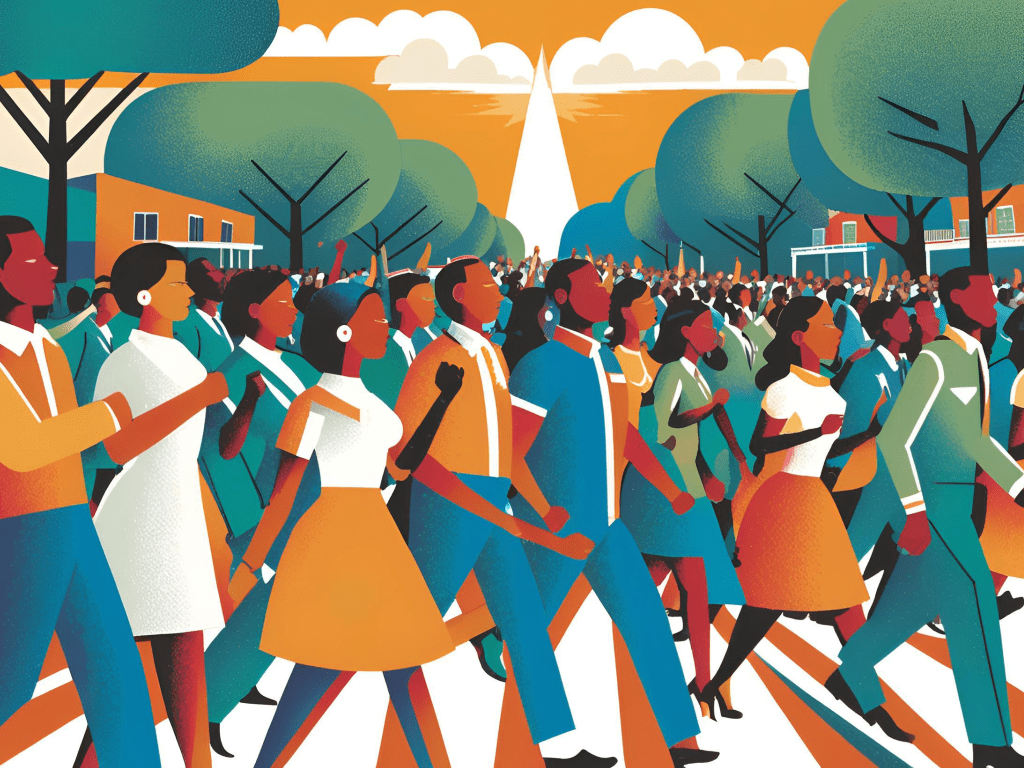

A reflective walk through the National Center for Civil and Human Rights in Atlanta, Georgia will strike anyone with curiosity and seriousness with what society in the American South once looked like. This will be especially true for much of white America, northerners, and those born after the 1960s with few or no memories of the days that preceded them. However, for the remaining folks who lived through the Jim Crow era, participated in the Civil Rights movement, or are children of the descendants who did, they are the memories and moments of a not-so-distant past.
Institutionalized racism and a tempered post-Civil War reconstruction cultivated a wave of generational segregation, discrimination, unjust policies, and violence against black and brown people in the United States during the first half of the 20th century. Exhibits like those at the National Center for Civil and Human Rights and the National Civil Rights Museum at the Lorraine Motel in Memphis, Tennessee serve as physical and cultural reminders to our unique and broken American story. They provide all Americans an opportunity to learn from the wrongs and injustices of our past and encourage us to define a better future for our children and future generations.
We all play an important role in dismantling institutionalized discrimination and ideologies from our social and cultural norms.
Today, we are at risk of losing the social equity and institutional reforms necessary to make segregation, discrimination, and racism a true reality of the past. Contrary to common misconceptions that presume the Civil Rights movement is “over” or “settled history,” systemic discrimination and racism continue. There is no clearer place to look than school systems nationwide, especially in the South.
A recent dismissal by the Justice Department of an open decades-long case in Louisiana mandating judicial oversight to maintain desegregation sparked new concerns, including the daughter of Martin Luther King, Jr., Bernice King.[1] Considered an administrative relief due to inactivity and framed as “righting a historical wrong,” the Justice Department appears to ignore the data of such efforts in favor of historical revisionism. Since 1988, racial segregation between white and black students has increased by 64% in the 100 largest school districts. Additionally, research has shown that within five to eight years after districts are freed from court mandates, segregation increases in those districts.[2] The case in Louisiana is another example of the erosion of civil rights, especially those that potentially target the most underserved and vulnerable in society.
Since 1988, racial segregation between white and black students has increased by 64%.
We all play an important role in dismantling institutionalized discrimination and ideologies from our social and cultural norms. The legacy of racism is a true Colonial and American “original sin” that we can be set free from, so long as we choose it. The solutions are not hard—but many hearts are. Building a more hopeful future requires practicing openness toward other people, their personal and family stories, and the humility to understand their lived experiences in society, even when it challenges our own presuppositions and world views. The pathway to a better tomorrow mandates personal growth, cultural understanding, and policies that equitably serve everyone.
Visit a Civil Rights Museum. Read black authors who lived during that period or have studied it well. Listen to the less often-heard speeches of Martin Luther King Jr. and other activists of the 1960s. See your community with fresh eyes and ask thoughtful questions about how people are displaced and where they attend school, travel, and shop. Pray and reflect deeply about your potential complicity to injustices. Then, advocate with your voice, gifts, creativity, and your vote for a hopeful and better tomorrow for everyone, everywhere.
[1] https://www.instagram.com/p/DJIaDbcs__m/?igsh=dG11eTM4Y3Zhczl5
[2] A curated breakdown on the Louisiana case and the impact of desegregation of schools can be found, https://www.perplexity.ai/search/what-was-the-lousiana-plaquemi-CSowOZfsR3CBDeT7mPE9JA


 Matt Till