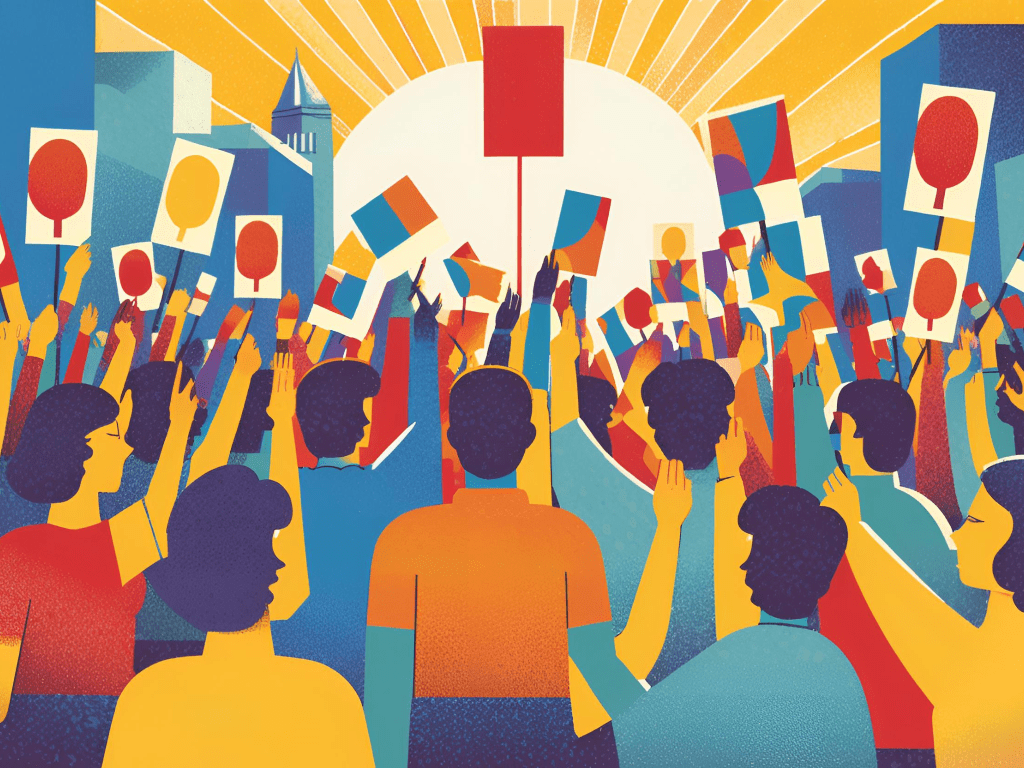

Late in the evening of May 4, 1886, on the near west side of downtown Chicago, Illinois, hundreds of working laborers from across the city gathered for a rally at a well-known produce market, Haymarket Square. Earlier that week, tens of thousands of workers in Chicago began a general strike, joining a nationwide movement led by labor unions that declared May 1, 1886, to be the formal start of what would become known as the 8-hour work day. In a post-civil war era where industrialization was booming and urban markets were abuzz, working conditions deteriorated while profits rose. Employees had been earning $1.50 per day (roughly $50 per day in today’s economy) and worked 60 hours per week. A growing movement among the working majority found their voice and used it to create change for a more hopeful future.
At the rally in Chicago, the crowd began to dwindle due to weather, and those that remained listened to the Reverend Samuel Fielden, a Methodist preacher, give a brief speech after 10 o’clock that night. As he concluded, the Chicago police began their march south from Lake Street down Des Plaines Street. In the tension of the moment, a homemade bomb was thrown behind the police line and exploded, immediately killing one officer and injuring several others. Chaos and confusion ensued for the next five minutes. In the end, with the streets cleared of protesters and officers left in disarray, seven policemen and four protesters had been killed along with dozens injured. After a contentious and unruly trial, eight defendants were found guilty of murder, including Rev. Fielden, but no one had been explicitly charged or found guilty of detonating the bomb.
Regrettably, a movement that began peacefully with moral demands turned violent. Accused of colluding with anarchists and foreigners, the national movement for workers’ rights was now at risk. To the business elite and the apathetic, this was not their fight. To them, the workers were not only unreasonable but dissenters and saboteurs. The movement endured and more workers rights were later secured, including the five-day workweek in subsequent years. We have our immigrant ancestors to thank for today’s worker protection laws.
As May Day demonstrations take place in the United States and around the world, leaders of hope and change stand in solidarity with everyday people making their voices heard.
Progress takes time. It also experiences setbacks like skepticism, swift opposition, anger, and sometimes tragedy. Violence is not a necessary precursor to holistic and peaceful change. Force, prejudice, and hate undermine the stated goals and greater vision of any movement for change, even when confronted with it by the opposition. Violence threatens the legitimacy of a movement, incites further distrust, and creates more enemies instead of winning allies.
The events at Haymarket Square in 1886 serve as a reminder of the cost of freedom and the necessity to pursue peace and justice for everyone, everywhere. Violence is the overflow of bitterness, hate, and frustration. Values like holism, openness, progress, and equality cultivate hope and positive change for everyone. These values, when practiced, defuse egos, create spaces for listening and learning, and invite thoughtful dialogue and solutions. 140 years later, society is still learning this vitally important lesson.
As May Day demonstrations take place in the United States and around the world, leaders of hope and change stand in solidarity with everyday people making their voices heard. Human rights, workers’ rights, and civil rights are worth our efforts and create a better tomorrow when they are fairly extended to everyone. We stand with those who choose nonviolence as a way of life and seek to befriend skeptics into their cause with truth, grace, and love for humanity. Our movement is one for all generations—a more peaceful and just world for all.



 Matt Till