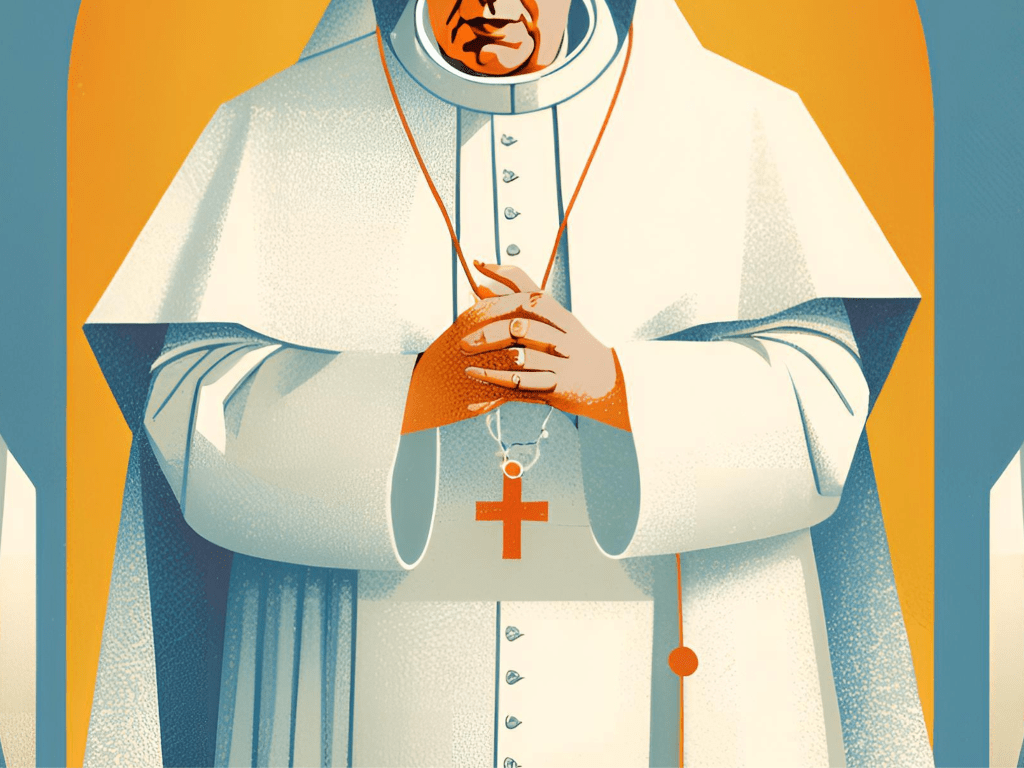

The world has lost one of its highest profile and most significant voices for humanity of our time, Pope Francis. Influential among Catholics and non-Catholics, Francis was known as an unwavering vocal advocate of the poor, marginalized, and oppressed around the world. His death comes at a time when human rights violations, economic turmoil, violence, humanitarian crises, and the oppression of people groups are threatening the stability, peace, and wholeness of people everywhere. As the faithful mourn the death of their spiritual leader, the world grieves the loss of an important figure for hope and change.
Pope Francis was a champion of compassionate Christian values in the modern era. His positions were often received as a breath of fresh air among liberal Catholics, Protestants, and humanists alike. Moreover, he was known for seeking friendly relations among interfaith leaders—a vital work for cultivating understanding, peace, and friendship among diverse people living in proximity to one another. Despite his privileged position of authority and accommodation in the Vatican, Francis worked tirelessly to remake the universal church into an inclusive and accessible space for all people. By all accounts, he sought to reimagine what it means to faithfully follow and represent the spiritual father of Christianity, Jesus Christ, among the global church he led.
Pope Francis was a champion of compassionate Christian values in the modern era.
As such, Francis regularly called upon Christians “to live deeply our identity as disciples of the Lord Jesus Christ.”[1] To do so would require acknowledging, listening, and responding to the voices of the poor, victims of conflict, and the concerns of young people in a pluralistic and modern time. Francis, believing in inclusivity as a feature of the Christian witness for the world, once said, “As Christians, we are called together to eliminate [the] globalization of indifference which today seems to reign supreme, while building a new civilization of love and solidarity.”[2]
Participating in creating this vision for humanity is the ultimate aim for leaders of hope and change. A decade following those words to the people of Istanbul, Turkey, the world is fracturing and moving further from the unified and peaceful ends Francis called upon the church to help forge. The present-day reality is not a reflection of the failure of Francis’ message or theology, but a warning to the growing needs and work ahead. In Biblical language, Francis was not so much a priest as he was a prophet for our time.
“As Christians, we are called together to eliminate [the] globalization of indifference which today seems to reign supreme, while building a new civilization of love and solidarity.”
Pope Francis
Much like our spiritual and human rights activists of the past, prophets are more often rejected, despised, and viewed with deep skepticism among the public. Historical and modern-day prophets expose social ills, abuses, and neglect, make calls for justice, and seek to hold systems of power and authority accountable. In the age of kings and authoritarians, the prophet is hated not because of who they are but who they stand for.
Prophets shine an empathetic light on the forgotten and oppressed while calling upon the privileged to be liberated from their prisons of greed and self-preservation. As modern-day “priests” capitulate to apathetic and irrelevant positions, “kings” are permitted to seize unchecked authority and rule allowing them to shape institutions and nations to their benefit. History repeats itself by giving rise to the “prophets” and activists. They are called upon by their moment in history and by God to advocate for the poor, marginalized, oppressed, and neighbors both near and far. Despite his heightened position, Pope Francis was a prophet in priestly clothes for our time.
In the age of kings and authoritarians, the prophet is hated not because of who they are but who they stand for.
The cries for hope, change, and a better tomorrow are growing louder. As millions mourn the loss of a global leader, the same power that gave him strength and courage is being shared with those awake and ready to receive it. Leaders of hope and change—the everyday prophets of today and tomorrow in unseen places and communities—are embracing their renewed calling to bring peace, justice, and wholeness into the world.



 Matt Till