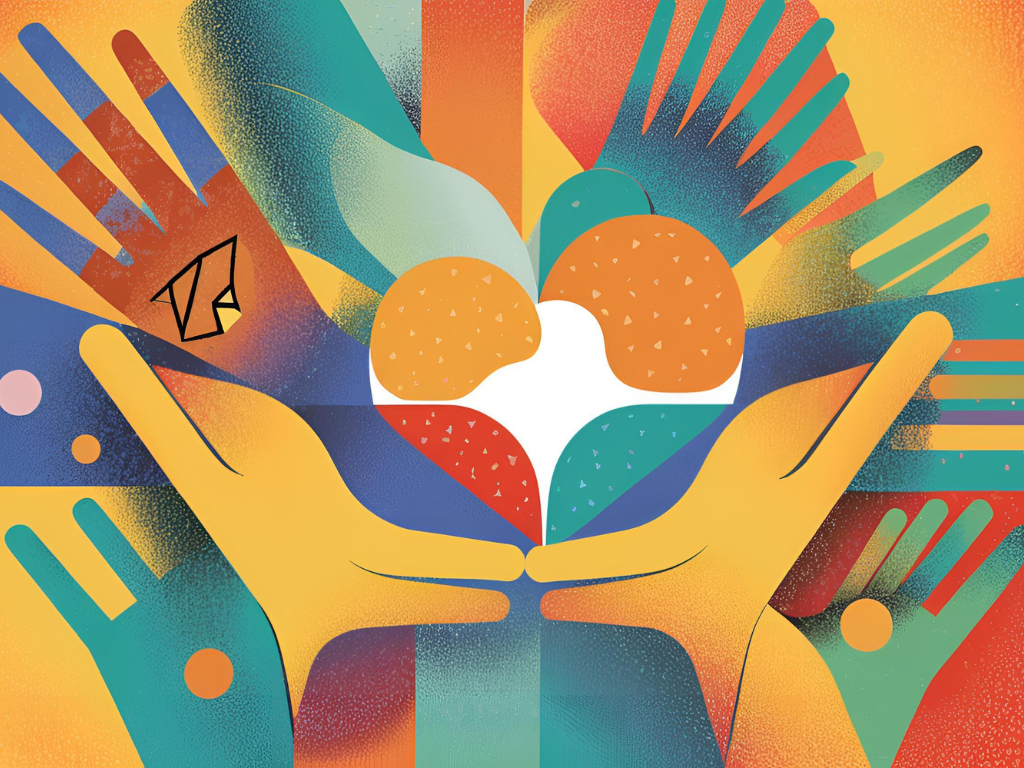

We are (not) alone.
Friendship, compassion, and generosity are what sustain families and communities. It comes in many forms like helping raise our children, caring for each other when in need, celebrating life’s milestones and successes, and giving time and resources to rebuild after disaster strikes. But without the tangible support and physical presence of others, human dignity and wellbeing are diminished.
Human bonding is natural and remarkably easy, but requires cultivation and societal reward to flourish. At the heart of compassion and generosity is the belief that everyone belongs and is created for goodness. This is why people have historically built and supported schools, libraries, places of worship, community centers, parks, and social organizations. They created natural spaces for connecting, friendships, belonging, and community support.
At the heart of compassion and generosity is the belief that everyone belongs and is created for goodness.
Alternatively, a worldview that believes humanity only successfully exists in a competitive marketplace of ideas and transactional encounters will rapidly erode the fundamental basis for peace, progress, and hope. In this view, living things thrive by strength and dominance over the meek and humble. Nihilistic evangelists would have us believe choosing a winning team on offense that achieves maximum benefit for itself is the surest way to greatness and happiness. It’s a tantalizing message for those feeling alone, discouraged, or in despair.
However, reality reveals a different conclusion. Transactional relationships and competition may drive short-term results but cannot sustain long-term growth and sustainability. Business deals sour, resources dwindle, economies shift (or collapse), people become comfortable and complacent in their privilege, and oppressive powers are eventually overturned by those determined to restore their dignity and rights.
Gutting resources and services for humanitarian aid, displacing millions of ethnic people from their homeland through war and occupying it for a real estate deal, raising prices with the intent to enrich ourselves at the expense of others, and denying fundamental human rights to persons of divergent identity are the solutions of transactional, self-serving people in the halls of power. Locally, such individuals may engage in dishonest business deals, overcharging for goods and services, stealing from a neighbor, cheating on a partner, and refusing to help the poor and underserved among us. These are not the beliefs or behaviors that seek to cultivate a more holistic, open, peaceful, and equitable world. Instead, they undermine the human spirit—our collective resolve to hope for a better tomorrow.
Transactional relationships and competition may drive short-term results but cannot sustain long-term growth and sustainability.
It’s difficult to imagine what comes next if we continue trending toward an aggressively competitive, sole-survivor society. History has important insights for us, but so do current conflicts. The war between Israel and Gaza is just one example of how an oppressed people and a superpower each respond to existential threats from each other. Carnage and bloodshed are not far behind.
Humanity can reverse course and find common ground. Dormant within us is the spiritual capacity to increase our friendship circles, compassion for others, and near-infinite generosity for those in need. Just as our communities rely on us, and us in them, we need the world, and the world needs us.



 Matt Till