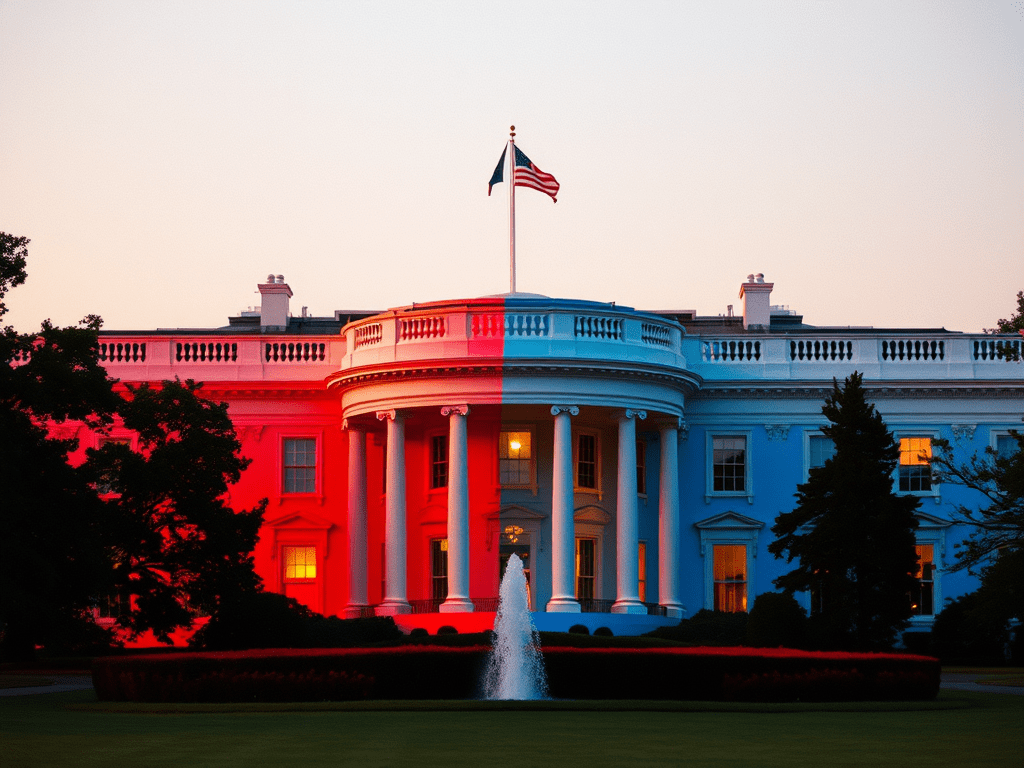

The key question we’ll be asking this week is, “What happens next following Tuesday’s election?”
Will the economy improve or get worse? Will the wars in Ukraine and the Middle East end or escalate? Will protests erupt on the streets like during the pandemic in 2020 or violence in Washington, D.C., on January 6, 2021? Will the stock market crash, or will it soar? Will the world spiral into chaos, or will a divinely elected leader usher in peace?
While hyperbolic and existential questions like these can’t be definitively answered, there’s no doubt many will feel weary or elated once the race is called. History, however, will remind us that systemic change – positively or negatively – is incremental. We can be sure that some will attempt to seek change quickly, while others will resist it fiercely, regardless of who wins the 2024 presidential election. One prediction that is safe to make is the feelings of polarized satisfaction and frustration are certain to cloud our interactions for the days and weeks to come.
This leads to a more fundamental question that is of greater urgency and importance: How can I continue living alongside my neighbor, coworker, classmate, or family member who voted differently than me?
The Relational Crisis Is Real
Political polarization, ideological antagonism, and institutional distrust are the conditions that turn everyday interactions into alienating encounters. Almost everyone in America today has a story of a broken relationship over differences that feel immensely personal to them. When ideological and political movements become internalized, it’s hard not to feel pain when the belief system is questioned or openly attacked.
How can I continue living alongside my neighbor, coworker, classmate, or family member who voted differently than me?
Public policy issues matter in this election, but a vision of what society can look like in the days immediately after the election is more important than ever before. With nihilistic claims of riots, violence, invasions at the border, and a new world war, discovering hope in changing and unsettling times is critical to shaping a new story we can collectively believe in. How those beliefs are shaped and tested will inform our imagination of what is possible.
Endowed with reason and emotion, we’re naturally inclined to be drawn into movements that help us make sense of the world we live. We not only experience the world, but we also emotionally feel our way through it and make judgments along the way. This is, in part, how our worldviews are formed. Beliefs are shaped, challenged, or expanded in the context of trusted people and information sources.
In a more equitable society, people discover and affirm their beliefs in safe and diverse spaces surrounded by intentional relationships. There will always be differences and disinterest between groups. It’s natural for individuals to gravitate toward those with whom they share affinity, ideals, or spirituality. However, when those differences rise to bitter distrust, the demonization and hate of others is not far behind.
We Have More In Common
Following Tuesday’s election, for society to function healthily in our politics again, we best look inward before blaming each other or attempting to tear the system down. This is, after all, a democracy built on the messy ideals of creating “a more perfect Union”[1] while recognizing the dangers of radical undoing because “Prudence, indeed, will dictate that Governments long established should not be changed for light and transient causes.”[2]
Although the human experience is rich in cultural diversity and perspectives, people have more in common than what separates us – regardless of what we believe or where we’re from. Mothers and fathers from the United States to Mexico, Venezuela, Haiti, Israel, Gaza, Ukraine, Russia, and North Korea all work to survive, feed their families, and sacrificially love their children all the same – in the best or only ways available to them. What unites “us” and “them” is a deep desire for love and hope – a belief that a better tomorrow is achievable.
What unites “us” and “them” is a deep desire for love and hope – a belief that a better tomorrow is achievable.
A story from the New Testament is a timely reminder of the fragile world we inhabit and the experiences we share. In the well-known Sermon on the Mount, Jesus preached to his followers, “This is what God does. He gives his best – the sun to warm and the rain to nourish – to everyone, regardless: the good and the bad, the nice and nasty.”[3] It’s a humbling reminder there are no physical or spiritual distinctions between who receives what on earth – all are permitted to enjoy the beauty and bounty of this life. So why not share it with our neighbors so they will one day do the same for someone else – maybe even us?
Hope Requires Humility and Courage
Leading and living with hope requires both humility and courage. Humility is a necessary posture and practice that allows openness to new experiences, ideas, and stories, regardless of where they come from. New stories of hope are often discovered in the most unexpected places. Previous attempts, reimagined concepts, or unconventional approaches can spark change for a brighter and more prosperous future for everyone.
Leading and living with hope requires both humility and courage.
Hope also requires courage because it’s the inner force that helps us face our deepest fears. The prospects of introducing different people, ideals, and cultural traditions can bring about fears of distrust, change, loss of status, or worse, condemnation. Courage to confront our deepest fears and permit ourselves to consider change or learn something new is just as critical in learning the skill of openness. Without inner courage, compassion will not come naturally, and compassion helps us see each other in our purist form – in our humanity.
By courageously opening ourselves to others’ experiences, pain, and dreams, we can strengthen the muscles that carry the weight of compassion, regardless of who they voted for. Combined with a growing spirit of humility, our capacity for seeing the world in a new light only promises to grow steadily. This is the beginning of hope and change for our nation well beyond Tuesday’s election.
[1] The Constitution of the United States. https://www.archives.gov/founding-docs/constitution-transcript
[2] Declaration of Independence. https://www.archives.gov/founding-docs/declaration-transcript
[3] Matthew 5:43-47, The Message.


 Matt Till