

We live in paradoxical times. Hopes of a vibrant and long life for ourselves are in tension with our emerging reality and confirmed through personal experiences. Anxiety, depression, psychological trauma, and conditions such as cancer and autoimmune diseases – all of which I have faced – cloud humanity’s progress and increasingly threaten our long-term survival. My personal struggle with these conditions has left me with deeper questions about life and frequently discontent with single-minded solutions. My journey – grounded in the belief that despair is not the final word in life – has led me on a quest for hope and change for myself and perhaps can inspire others.
The modern world presently enjoys an unprecedented life expectancy rate, especially among mature capitalist societies. Everyday life is possible because of humanity’s seemingly unlimited capacity for ingenuity and adaptation for community survival. The expansion in access to vital resources such as food and clean water, shelter and sanitation, reliable sources of fuel and electricity, and life-saving medicine and treatments has ushered in a new era of population growth and vitality.
Vacalv Smil, Distinguished Professor Emeritus at the University of Manitoba who studies energy, environmental change, innovation, and public policy concludes, “[Humans] are a very inquisitive species with a remarkable long-term record … in making the lives of most of the world’s population healthier, richer, safer, and longer.”[1] In the United States, life expectancy at birth in 2022 is estimated to be 77.5 years.[2] That amounts to a full 30 years added to the average lifespan of an American before industrialization, and more than double our Paleolithic ancestors who lived to an average age of 33.[3] We are – in fact – living longer lives.
The Source of Our Pain
Despite advances in public health and the prolonged lives we can reasonably expect in the modern age, there is growing evidence that demonstrates today’s extended lifespan does not necessarily equal good health or positive well-being. In the United States alone, over 1.3 million lives are cut short every year due to heart disease and cancer combined.[4] So prevalent, nearly every individual will know countless others who will have suffered from one of these noncommunicable diseases in their lifetime.
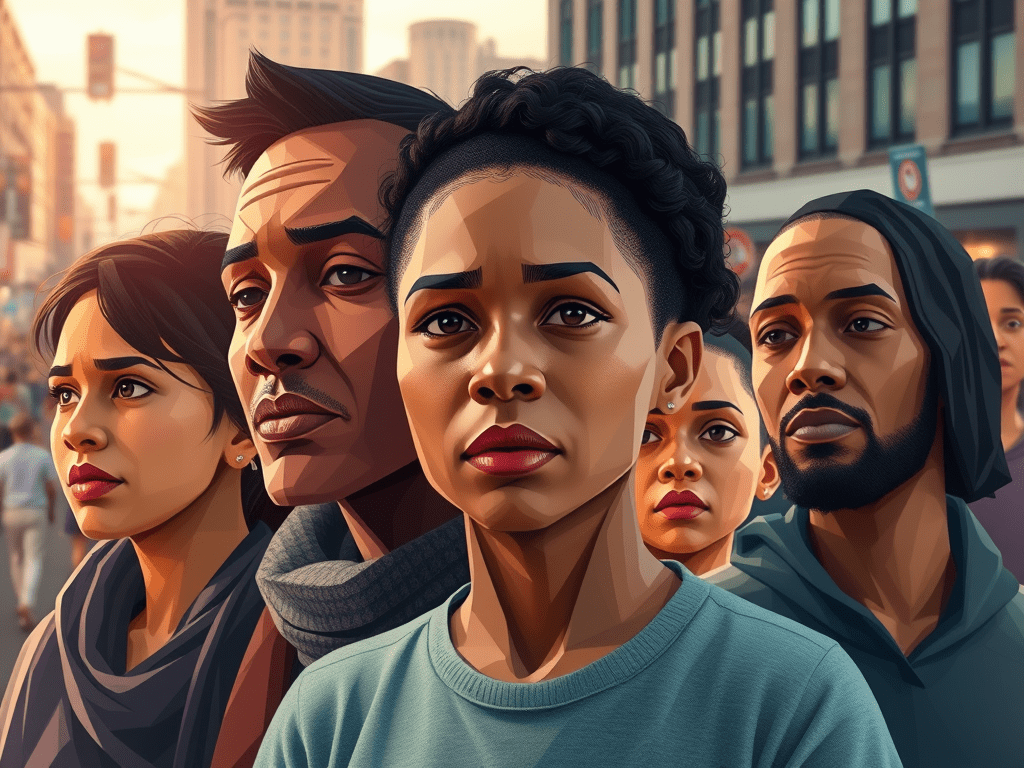
Other ailments that don’t spread through pathogens are increasingly eroding our individual and social well-being. They include a wide array of autoimmune diseases along with mental health conditions that often become evidentiary precursors to the formation of adverse health conditions and premature death. In a time where by every significant measure humanity should be experiencing widespread flourishing, we are instead plagued with grief and suffering.
In his book, The Myth of Normal, Dr. Gabor Maté explains the growing trends of unhealth in our world. He writes, “Much of what passes for normal in our society is neither healthy nor natural, and that to meet modern society’s criteria for normality is, in many ways, to conform to requirements that are profoundly abnormal in regard to our Nature-given needs — which is to say, unhealthy and harmful on the physiological, mental, and even spiritual levels.”[5] In other words, modern social “norms” are detrimental and trauma-inducing, creating predictable patterns of illness in every sphere of human life.
Restoring People by Fixing Systems
After decades of discovery and advancement in medicine, attention is being given again to emerging trends in interdisciplinary methods for holistic health and well-being that recognize individuals in relationship with their environment. Such an approach doesn’t see every illness and poor health outcome as isolated problems to be fixed but as natural and predictable physiological and psychological responses to ongoing unnatural and traumatic conditions in a person’s life. In this paradigm, when individuals are hurting they need relief from dysfunctional and oppressive social systems, not themselves. If people were like broken pots, we would restore the pot and permanently fix the shelf.
In Johann Hari’s groundbreaking investigative book, Lost Connections, he explores the oft-ignored causes and solutions to depression and anxiety. He summarizes, “The real story … has been known to scientists for decades. Depression and anxiety have three kinds of causes – biological, psychological, and social.”[6] Through his research and numerous interviews, he has uncovered the deep and consequential interconnectedness of individuals with their environment – most notably, society’s impact on it, for better or for worse.
The growing body of evidence reveals what can no longer be denied: our social support systems are broken and, as a result, we suffer. Hope is not lost, however, because these are systems of our creation and control. If humanity is adversely impacted by our social, physical, and biological environments, then healing can also come through them. New behaviors require alignment with new beliefs.
Unfortunately, patient, client, laity, and political gaslighting remain all too common because distorted narratives persist. Blame and shame messaging are abundant: stop smoking, overeating, drinking, abusing substances, being anxious, lying, stealing, and reliving your painful past. These may be seemingly obvious behavior adjustments to many of our immediate crises, but they lack context, compassion, and lasting solutions. They are prescriptions that ignore the root cause of our innermost pain and leave us affirming false beliefs about ourselves and each other that are counterintuitive to our existence.
Humanity has been created to evolve and thrive, not corrupt, degrade, or numb our lives in self-destructive behaviors. Under better circumstances, humanity has the capacity and will to choose goodness for themselves and each other. Put another way, healthy conditions produce healthy outcomes; unhealthy conditions produce unhealthy outcomes. Our ability to heal and live more promising lives is embedded within the human condition and our biological beings. Healing begins by acknowledging our pain and the true source of it.
Envisioning a Better World
What if our journey to healing started with a fresh imagination?
It might begin with imagining a world where the social “norms” that cause preventable harm, pain, and anguish are no longer accepted. Imagine a world where those who are suffering can experience healing, happiness, and unprecedented longevity because society wills it for everyone. Imagine a world where people see themselves as part of an integrated global ecosystem designed for beauty, sustainability, and human flourishing under the best conditions. Imagine a world where people participate in the collective well-being of their communities across social groups, cultures, and ethnicities with compassion over competition. Imagine a world where people, in their aging days, can pass on from this life into the next knowing their time was full, vibrant, and filled with satisfying experiences.
If preventable pain and conditions such as anxiety, depression, and post-traumatic stress result from systemic traditions, our pathway to hope and healing then is also systemic. Global warming, the exploitation of natural resources, pollution, war, acts of mass violence, human and civil rights violations, and poverty are issues with unmistakable correlations to poor health outcomes. Values-based public policy that protects and promotes the well-being of blended societies and diverse local communities can bring about widespread change. Good policies do not seek to control but promote collaboration for human flourishing.
It’s often easier to accept a conditioned belief that we are enslaved to our self-serving behaviors or products of inherited guilt than to see broader social systems as the origin of our innermost pain and the harm we inflict against one another. The solution begins with our ability to believe something better and more beautiful about ourselves and each other. I maintain hope for the future because, as I have learned in my own journey, we are always capable of miraculous change.
[1] Vacalv Smil, How the World Really Works: The Science Behind How We Got Here and Where We’re Going, (Viking: London, 2022), 214.
[2] Kochanek KD, Murphy SL, Xu JQ, Arias E, “Mortality in the United States, 2022,” NCHS Data Brief, no 492. Hyattsville, MD: National Center for Health Statistics. 2024. https://dx.doi.org/10.15620/cdc:135850
[3] “Life expectancy,” Wikipedia, last modified March 18, 2024, https://en.wikipedia.org/wiki/Life_expectancy.
[4] https://www.cdc.gov/nchs/data/databriefs/db492-tables.pdf#4
[5] Gabor Maté, M.D., The Myth of Normal: Trauma, Illness & Healing in a Toxic Culture, (Avery: New York, 2023), 7-8.
[6] Johann Hari, Lost Connections: Uncovering the Real Causes of Depression – And the Unexpected Solutions, (Bloomsbury USA: 2018), 256.


 Matt Till