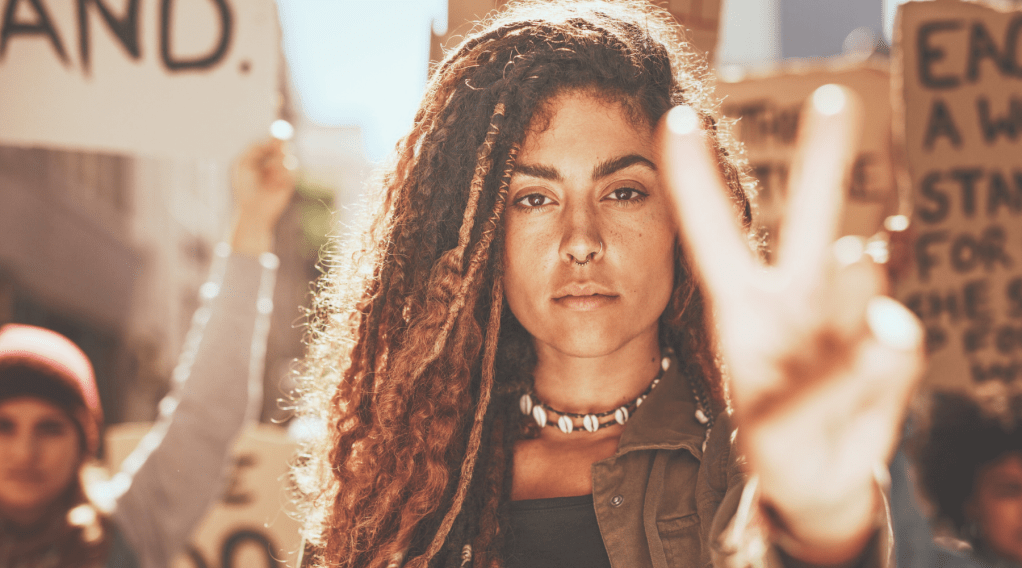

Global events are now local issues. This is the result of living in a globalized and digitally-interconnected world. From commerce to travel, entertainment, and technology, our shared humanity is seen and appreciated by the masses, an experience no longer limited to the wealthy and adventurous among us. We are more aware and connected to the challenges and suffering of those we share our world with.
The ongoing war in Israel and Gaza along with an increasing possibility of direct conflict with Iran brings new fears to our global ideological allegiances. As such, there are growing tensions in the United States in response to what is taking place in the middle east, especially on college and university campuses. It’s no surprise given these are the very spaces where the free exchange of ideas and beliefs are simultaneously embraced and challenged in a delicate – yet imperfect – balance. Some of the largest and most well known campuses, such as Columbia University and Yale, have been dealing with pro-Palestinian protests that have turned toward hateful rhetoric. Calls to “Free Palestine” from apartheid and siege have evolved into open antisemitic threats and intimidation of Jews[1]. Large organized protests have also taken place on major roadways, bridges, and airports around the nation in order to bring attention to the cause[2].
The privilege for everyday people to vocalize and protest the immoral beliefs, behaviors, and bureaucracy in society is a long held value of democracy. In America, this right is protected under the broad interpretation of the First Amendment. The freedom to protest is not only a historical tool used by groups of people to elevate awareness to the plight of a minority or oppressed group, it’s a necessary component to a healthy and vibrant democracy. The right to protest and recruit others to participate in your cause is vital for holding those in positions of power accountable and to awaken the consciousness of society toward a higher moral ground for the benefit of the whole.
The privilege for everyday people to vocalize and protest the immoral beliefs, behaviors, and bureaucracy in society is a long held value of democracy.
This week marks the beginning of the Jewish holiday Passover. The story of the Israelites’ deliverance from slavery in Egypt is perhaps humanity’s greatest epic of all time. An enslaved people for generations are, after a miraculous faith-filled struggle, delivered from their captors in an act of divine justice served on their behalf. The tradition of Passover has and continues to serve as the foundational hope of salvation from earthly injustice and despair.
Christians have a long history of standing with the Jewish people and the nation of Israel. There are cultural, religious, and political reasons for this. Even Dr. Martin Luther King, Jr. regularly evoked the Exodus story in his speeches and sermons during the Civil Rights Movement. It became one of the animating Biblical narratives that helped the movement sweep across the nation, motivating protests that called for the deliverance of a better America for Black people and the marginalized in society. For Jews and Christians, their shared origin of faith is a natural place for common ground, friendship, and hope in times that threaten the sovereignty and existence of one another.
The tradition of Passover has and continues to serve as the foundational hope of salvation from earthly injustice and despair.
Protest is not a modern conception, it’s the function of humanity intended to express its full potential and freedom to live, create, dream, and grow. One might argue Moses was exercising a courageous protest against Pharaoh and the Egyptians in his advocacy and prophetic call to, “Let my people go.” With God’s divine intervention, Moses bravely elevated the Israelites’ cause among the consciousness of ancient Egypt in a very public and dramatic way. (It’s worth noting, according scripture and tradition, neither Moses nor the Israelites called for violence against Egypt, only for their freedom.)
As the world anxiously waits for the return of dozens of Israeli hostages and the missing, the end to innocent casualties and mass desolation in Gaza, and for potential new flashpoints to erupt across the Middle East, the Passover story will be retold around the world this week. Perhaps now, at the intersection of a great religious tradition and the perilous moment in history we collectively find ourselves, there’s an opportunity to join a new movement of protest and hope. A protest of radical compassion and courage that demands a deep, spiritual source of self-restraint and moral clarity. This form of protest is what separates a righteous cause from a hateful and violent end. The moment demands a greater protest built on faith and our common humanity.
At the intersection of a great religious tradition and the perilous moment in history we collectively find ourselves, there’s an opportunity to join a new movement of protest and hope.
In the Christian tradition, the Apostle Paul wrote to the people in the ancient Mediterranean city of Galatia who were becoming increasingly divided among themselves. Ideological differences were growing deep, relationships were breaking, and the society as a whole might soon suffer. The Apostle’s charge to this fragile community was challenging, beautiful, and hopeful. He wrote, “There is no longer Jew or Gentile, slave or free, male and female. For you are all one in Christ Jesus.” (Galatians 3:28)
The call for unity is a call for seeing each other as one. We are, after all, made from the same molecular “stuff” that built the cosmos. Our DNA strands are nearly identical apart from the subtle differences that determine our skin, hair, eye color, and distinguishing features that make humanity diverse just enough to make us fascinating and unique. We are, in our shared existence, one species, one people, and one family under the stars and God.
Just as it is true in Israel, so it is in Gaza and for billions around the world – we give thanks when death and despair passes over our homes so that we may live another day. Non-violent protests will and must continue because peace demands, “Let my people go.”
[1] https://www.politico.com/news/2024/04/21/chaos-columbia-jewish-moskowitz-santos-white-house-00153545


 Matt Till