
Discussing the future often feels bleak these days. Polling on the attitudes of Americans demonstrate a growing lack of trust and confidence in our social institutions, economy, and more generally, our collective future. Researcher Ryan Burge confirms this trend with data collected over the past fifty years, reflecting a mix of steady and steep declines of trust in institutions among every generation.[1] Even confidence in our willfully elected leaders demonstrates higher rates of pessimism and distrust over an optimistic future. At the beginning of 2024, American’s are polling high unfavorable numbers for both presumptive candidates for office this election cycle, Joe Biden and Donald Trump, at a time of increasing uncertainty.[2]
There is no shortage of current events and emerging threats that further raise anxieties about the future. Flashpoints of armed conflicts in the Middle East, Asia-Pacific, Africa, and Haiti, to full out war in Ukraine and Gaza are at the forefront of global insecurity and suffering. On the horizon are increasingly distrustful actions matched with hardline rhetoric regularly exchanged between nations and their leaders, such as Russia and NATO-aligned countries, China and Taiwan, North Korea’s taunts directed at neighboring democratic nations including the United States, and fractures in long standing alliances, like Israel.
Additionally, there are growing fears not experienced since the end of the Cold War. The New York Times recently published a series of opinion articles reexamining the growing threat of nuclear war in our increasingly connected and artificial-intelligence driven world. In a gripping essay, W.J. Hennigan writes, “Nuclear war is often described as unimaginable. In fact, it’s not imagined enough.”[3]
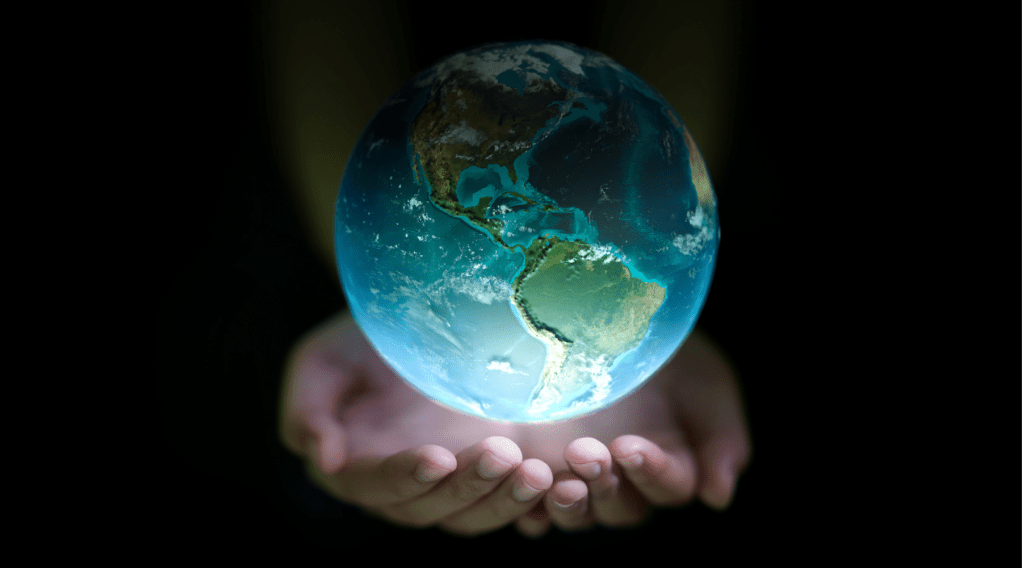
Our fears over a futuristic nightmare are not preordained or ultimately beyond our control. Humanity has the creative power to shape a future that promotes life and sustains the wellbeing of the world.
A brief and alarming survey of the global greenhouse we know as home also includes plenty of pressing domestic issues facing our local communities. Gun violence, immigration, civil rights violations and hate crimes, growing economic inequality and poverty, mental health, drug addictions, access to education, rising insurance costs, capitalistic greed, and the impacts of climate change on every region of the country, are just to name a few.
For many, it’s easier to disengage from the negative news of current events and resign ourselves to complacent or negative beliefs about the world. Common impulses often sound like, “It’s always been this way,” “Those fears are overblown,” and “Bad things are just a part of life.” When we deflect and blame, we’re activating a natural coping mechanism when the future feels uncertain and vulnerable, especially in times of powerlessness. Deep down we know on an individual level we have little ability to reverse the effects of climate change or stop a rogue leader, including one of our own, from activating the launch of a nuclear warhead. Our instinct is to self-protect when solutions seem out of reach or too difficult.
Yet, it’s here in our collective denialism and anxiety that our greatest potential for hope begins to rise. Somewhere between pessimistic retreat and fantasies gone unfilled are dreams still worth dreaming for those who long to be awake.
If a dystopian future is to come about in our or our children’s lifetime, it will not be for any reason (apart from a cataclysmic astroid strike) than our collective doing. This should give us hope that our fears over a futuristic nightmare are not preordained or ultimately beyond our control. Humanity has the creative power to shape a future that promotes life and sustains the wellbeing of the world.
Somewhere between pessimistic retreat and fantasies gone unfilled are dreams still worth dreaming for those who long to be awake.
In one of humanity’s great faith traditions, the story of Christianity is a story of the struggle to bring an alternate reality into existence. The story describes a present world in which pain, suffering, evil, war, death, and collective trauma are widespread experiences, but not a predetermined fate. The story climaxes with a savior figure, Jesus Christ, who brings hope of a new and better world to all of humanity.
Redemption, according to the tradition, is not achieved through conquest or conformity, but through unconditional love and acceptance embodied among individuals and their neighbors. The end result is nothing short of a utopian state that remains the eternal hope for Christians around the world. In the final pages of the Bible it reads, “Look, God’s home is now among his people! …He will wipe every tear from their eyes, and there will be no more death or sorrow or crying or pain. All these things are gone forever.”[4]
But the dreams of this generation are no longer limited to a life after this one. Our generation seeks to fulfill this promise of hope in today’s story of struggle.
The dreams of our generation are filled with vivid portraits of freedom from suffering, oppression, greed, and hate in all of its forms.
The dreams of our generation insist on the hope of a day where every street is paved with selfless love and compassion, shimmering like gold and sapphire on our celestial home.
The dreams of our generation believe the planet is perfectly designed to sustain life in all of its beauty and complexities when we embrace our human and spiritual bonds within it.
The dreams of our generation believe an alternative future can be realized when humanity comes together under a common purpose – to improve, sustain, create, and love the world in all of its diversity and wonder.
The dreams of our generation believe in a new reality where God will truly dwell among us in the fullness of peace and prosperity that we selflessly create for the benefit of everyone, everywhere.
[1] Ryan Burge, accessed March 17, 2024. https://twitter.com/ryanburge/status/1768616899737207283
[2] “Biden and Trump Evenly Matched in U.S. Favorable Ratings,” Lydia Saad. January 4, 2024,Gallop, accessed March 17, 2024. https://news.gallup.com/poll/548138/american-presidential-candidates-2024-election-favorable-ratings.aspx
[3] “Nuclear War Is Called Unimaginable. In Fact, It’s Not Imagined Enough,” W.J. Hennigan. The New York Times, accessed March 17, 2024. https://www.nytimes.com/interactive/2024/03/07/opinion/nuclear-war-prevention.html
[4] The Holy Bible. Revelation 21:3-4, New Living Translation.

 Matt Till