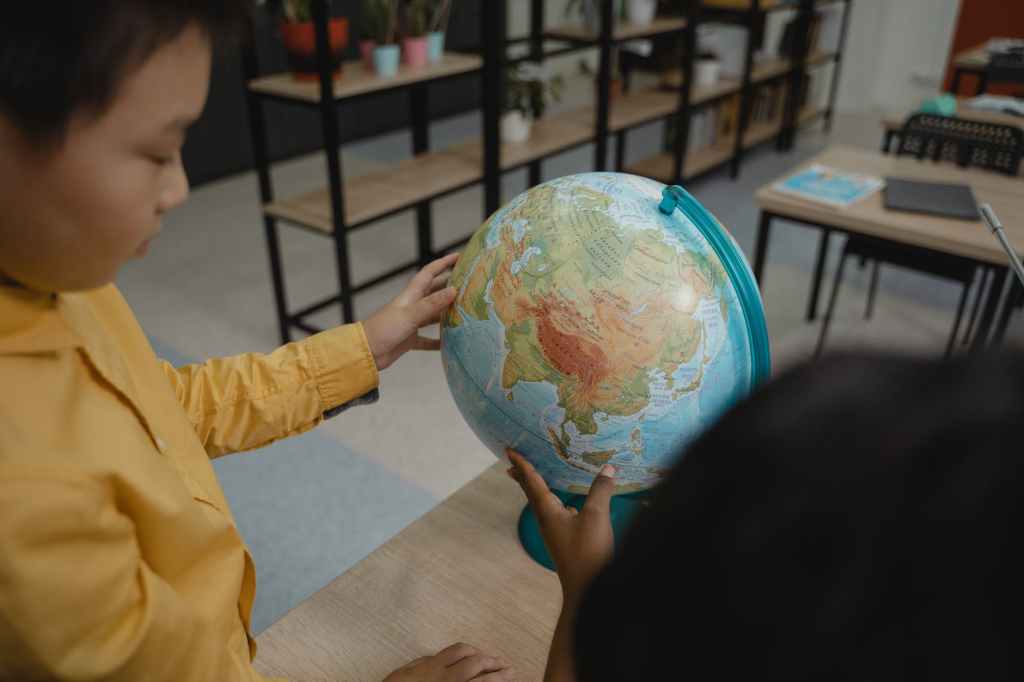

Our public schools are in urgent need. Teachers are overwhelmed, overworked, and underpaid. Classrooms are experiencing a crisis of dwindling numbers and closures. Books and curriculum are being unjustly criticized, targeted, or banned. Partisan ideology threatens the academic, creative, and religious freedoms of teachers. Funding continues to fall short and unable to meet the essential needs for successful learning outcomes in a growing and increasingly diverse society. From inner cities to suburban communities, it’s no wonder fewer children are attending public schools and families left to desperately seek alternative solutions.
As a father of three primary school-age children, these issues are at the forefront of our dinner table conversations. This year, our county school district announced plans to downsize, repurpose, and close schools due to decreasing enrollment and a loss of income that exceeds $200 million per year.[1] In 2022, voters approved a much needed pay raise for teachers[2], but incomes remain woefully short of meeting today’s cost of living needs. Income insecurity for teachers has a direct impact on the quality of education to our children in the classroom. A reality we should not be content to accept.
The growing education crisis and the shortcomings of investment in public education has created a needs-based gap now filled with alternatives like private schools and “pay-to-learn” programs. Despite these specialized and innovative solutions, such alternatives are further undermining public education leaving millions of children with fewer lifelong opportunities, more economically insecure, and under-prepared for the growing demands of a modernized world.
It’s no wonder fewer children are attending public schools and families left to desperately seek alternative solutions.
Serving as one example of a family caught in the middle of the education crisis, my wife and I have chosen the near-impossible task of homeschooling our children while simultaneously working full-time. Our decision to homeschool is born out of practicality and what we have come to recognize as our best choice, not a superior one. We acknowledge that any hope we have in helping our children succeed in these important years is a result of the flexible remote work arrangements that we presently hold, a privilege that is not lost on us. We also recognize that we only further exacerbate the issues by depriving a public school of additional head counts and thereby desperately needed funding. It’s a classic case of, “Which came first, the chicken or the egg?” It doesn’t matter when the coop is left neglected.
I believe public school should be the best and superior choice for every family. Society stands to benefit when our public schools are safe places of continual investment, learning, discovery, and community support separate from partisan politics, ideological agendas, and subjective standardized testing. Our children deserve the best outcomes, and the research is clear: children are happier, healthier, and secure when they have access to safe spaces that reinforce healthy habits and values, make meaningful connections with attentive and compassionate adult role models, and are given the tools and the space to learn, discover, and create.
Public school should be the best and superior choice for every family.
Children and their families are in need of vital resources that a public education can equitably provide when given the mandate to do so. Examples include: additional ESL teachers and translation services, universal and compassionate support for students with disabilities, modern and diverse libraries, healthy meal programs, and reinvestment in programs that shape young people into whole persons like the arts, physical education, extracurriculars, and community engagement opportunities. Instead, the current public school system increasingly looks more like an economic distribution model that benefits subjective performance scores and wealth inequality over the needs of our youth. A prevailing public education model requires an equitable approach that justly ensures every young person in society is valued and given an opportunity to become a contributing member to building a better tomorrow.
Whole communities benefit from the knowledge, skills, ideas, and diverse experiences an education provides. When our youth are educated as contributors to the common good instead of pawns in a game of capitalistic endeavors, they are rewarded in life by diversifying their collective learning and seek to expand educational access necessary for a growing, thriving, and culturally-rich society. Today’s model undermines this vision by creating an artificial hierarchy that incentivizes competition as a race to the top of an economic ladder that consistently fails to prioritize the health, wellness, happiness, and education of future generations.
A prevailing public education model requires an equitable approach that justly ensures every young person in society is valued and given an opportunity to become a contributing member to building a better tomorrow.
Education continues to be the pathway for a hopeful future for global societies. When children gain strong reading, writing, and math skills, access to scientific facts and discovery, a diverse reading of American and world histories, and outlets for creative expression, they become well-informed and compassionate members of our society who solve problems in creative and sustainable ways. Additionally – and perhaps of greatest value – a fully-funded public school is where well-trained education and resource professionals work alongside a coalition of diverse volunteers organized by engaged parents and community members. Where else can such a hub of community investment and unifying collaboration take place? The whole of our society – young and old – stand to benefit from radical reinvestment and policies that ensure these values are upheld.
Our public educational system needs a full-scale intervention at the policy level. Voting is how responsible adults act in a democracy. When it comes to public education, we cannot allow ourselves to vote according to presumed or misguided ideological agendas that undermine the fundamentals of education and academics. Instead, we must vote with a mandate for significant and radical reinvestment with the resources that are readily available for our schools. We can change the course of history by securing a successful and vibrant future for ourselves and our children. It’s time we choose to generously invest in the needs of our society and empower our teachers and administrators do what they have been trained to do: educate.
[2] https://www.sun-sentinel.com/2022/08/23/voters-approve-new-tax-for-broward-school-referendum/

 Matt Till
One response to “We Can Save Public Education”
[…] Florida schools are in dire need. Regardless of political affiliation, the majority of Florida residents with school-age children recognize the public school system is suffering from underfunding, overcrowded or closing classrooms, substandard teacher pay and retention, declining student attendance, increasing concerns over safety and security, and poor outcomes in academics and mental health. A Florida public High School teacher recently pleaded to me, “We don’t have enough help.” The system is blinking red and is need of urgent intervention. […]